Tuesday 14 | 02 | 2012
Naba Kishore Sarangi
As a film technician, I had the opportunity to visit Koraput in Odisha several times over the
ears. Each time I went, I was struck by its natural beauty - low rolling hills and red earth.
and disheartened by its poverty: Koraput is one of the poorest districts in India, with high
unemployment rates and low socioeconomic indicators. Inevitably, each time I returned, I
was assailed by my inability to do something concrete for the people I had worked with
and filmed. Was it right to document these people without actually helping them in some
way?
In 2008, I moved to Delhi to join Ideosync as an editor working on its radio productions.
But the memory of Koraput never really went away. One night, about a year later, I
received a phone call form a friend, informing me that one of the films we'd shot there
had received a National Award. I was elated - but it also reminded me that I had made no
headway in deciding what I could do for Koraput.
But all that was to change sooner than I thought - I was packing my equipment one evening
after a recording, when I heard that Ideosync's CR work was expanding to Koraput: Finally I
was in a position to work on something on the ground there! What followed was hard but
delightful work, working with South Orissa Voluntary Action (SOVA), a well known NGO
with more than a decade of work in the region, and the local tribal communities. We
designed and watched the CRS building come up in Chappar village, and watched the team
go from hesitant beginners to confident radio producers aswe taught them what we knew.
We saw community members sit enraptured around the stereo sets the reporters
conducted narrowcasts with, and burst into animated discussions about the programmes
they'd just heard...
Two years later, Radio Dhemsa is finally finding its feet: The name Dhemsa comes from the Dhemsa Naccha, a tribal dance that's very popular in
the area. Supported by UNICEF, the station will cover more than 60 villages including Koraput town itself. And with a steadily growing bank of
programmes in Desiya, the local dialect, the team is making good progress towards their launch date around the middle of 2012. What a proud
moment that's going to be for the Dhemsa team - and for me! (Glimpses of Dhemsa CRS and its team to the right.)
Tuesday 14 | 02 | 2012
Naba Kishore Sarangi
As a film technician, I had the opportunity to visit Koraput in Odisha several times over the
ears. Each time I went, I was struck by its natural beauty - low rolling hills and red earth.
and disheartened by its poverty: Koraput is one of the poorest districts in India, with high
unemployment rates and low socioeconomic indicators. Inevitably, each time I returned, I
was assailed by my inability to do something concrete for the people I had worked with
and filmed. Was it right to document these people without actually helping them in some
way?
In 2008, I moved to Delhi to join Ideosync as an editor working on its radio productions.
But the memory of Koraput never really went away. One night, about a year later, I
received a phone call form a friend, informing me that one of the films we'd shot there
had received a National Award. I was elated - but it also reminded me that I had made no
headway in deciding what I could do for Koraput.
But all that was to change sooner than I thought - I was packing my equipment one evening
after a recording, when I heard that Ideosync's CR work was expanding to Koraput: Finally I
was in a position to work on something on the ground there! What followed was hard but
delightful work, working with South Orissa Voluntary Action (SOVA), a well known NGO
with more than a decade of work in the region, and the local tribal communities. We
designed and watched the CRS building come up in Chappar village, and watched the team
go from hesitant beginners to confident radio producers aswe taught them what we knew.
We saw community members sit enraptured around the stereo sets the reporters
conducted narrowcasts with, and burst into animated discussions about the programmes
they'd just heard...
Two years later, Radio Dhemsa is finally finding its feet: The name Dhemsa comes from the Dhemsa Naccha, a tribal dance that's very popular in
the area. Supported by UNICEF, the station will cover more than 60 villages including Koraput town itself. And with a steadily growing bank of
programmes in Desiya, the local dialect, the team is making good progress towards their launch date around the middle of 2012. What a proud
moment that's going to be for the Dhemsa team - and for me! (Glimpses of Dhemsa CRS and its team to the right.)

Blog
Notes from the field from Ideosync team members.

 © Ideosync Media Combine 2011/ Best Viewed at 1650 x 1050 or higher
 Friday 20 | 08 | 2010
N.Ramakrishnan
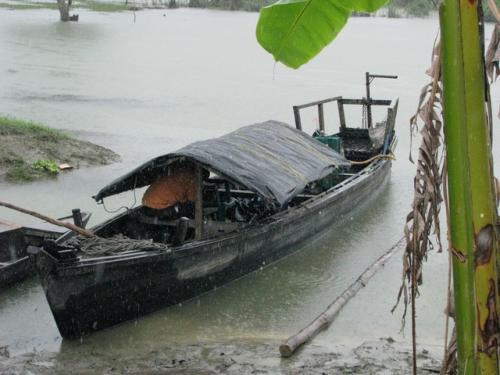
Travelling down the Brahmaputra under a gloomy sky, it’s easy to feel as if you’re
suddenly in a scene from Apocalypse Now. The chugging diesel, the muddy river and
the overhanging vegetation only add to the illusion; and suddenly I’m Captain
Willard, on his way up the Mekong to find Colonel Kurtz...
I force myself back to reality. This is Dibrugarh, Assam, not Da Nang. And I’m on my
way to visit Mishing villages on Dodia and Aichung chapories, the riverine islands that
split the Brahmaputra into so many snaking channels as it winds it way across the
landscape. We’re going to take some GPS readings that will - finally - let us mark the
islands accurately on the map of Dibrugarh that we are drawing up. A temporary
measure at best, since the islands shift every monsoon. See a video clip here.
Friday 03 | 09 | 2010
N.Ramakrishnan
Lalit Lokvani 90.4 is on air in Lalitpur, UP! What a great feeling after 3 years of hard
work! All the community reporters at Lalitpur have put in such a lot of practice, and
lived through so many delays and little distractions that we almost cannot believe
that we’re finally broadcasting!
The launch function was a huge success: Very well attended! Read the press release
here, listen to Lalit Lokvani’s signature tune here - and a folk song about the station
over here.
Friday 08 | 10 | 2010
N.Ramakrishnan
Dhadkan CR 107.8 is also on air, in Shivpuri, MP! Our third station to go on air after
Gurgaon Ki Awaaz and Lalit Lokvani - we’re on a roll!
The broadcast was inaugurated by the District Collector, Mr.Rajkumar Pathak, who
also participated in a live studio based programme as part of the opening broadcast.
Read the press release here, listen to a clip from the inaugural broadcast here - and
Dhadkan CR’s signature tune here.
Thursday 19 | 05 | 2011
Rakesh Nair
"Arre Sarnam, yeh lal button ko nahi dabaaoge to record kese hoga aawaz?” someone
exclaims. “Lacchi Raam Bhaiyya, fader ko utha doon?” calls another. And as a hand
signals a go, you hear: “Namaskar shrotaaon, aap sun rahe hein Dhadkan Samudayik
radio...” Everyone inside the studio takes a collective breath of relief as everything
is on track...
When I was first introduced to the concept of Community Radio Stations, I never
imagined that this would be such a powerful platform empowering the community.
Over the course of the trainings I conducted, I've been trying to understand how
becoming a part of this new process has transformed the lives of the CR team
members at each site. And I’ve slowly realized that becoming a CR team member has
given many of the CR volunteers a new life and visbility within their communities.
Ramvati, a member of Dhadkan CRS in Shivpuri, MP says: “In the tribal community I
belong to, women are not considered as an equal counterparts of the men; and so no
one wanted to listen to my opinion when there used to be a discussion happening in
the family or the community. But today I have my say in whatever matter is being
discussed.” Proud words, and well deserved!
Click on the links to the left to see the interviews with Ramvati Adivasi and
Ramshree Chandel, both from Dhadkan CR, Shivpuri, Madhya Pradesh.
Friday 20 | 08 | 2010
N.Ramakrishnan
Travelling down the Brahmaputra under a gloomy sky, it’s easy to feel as if you’re
suddenly in a scene from Apocalypse Now. The chugging diesel, the muddy river and
the overhanging vegetation only add to the illusion; and suddenly I’m Captain
Willard, on his way up the Mekong to find Colonel Kurtz...
I force myself back to reality. This is Dibrugarh, Assam, not Da Nang. And I’m on my
way to visit Mishing villages on Dodia and Aichung chapories, the riverine islands that
split the Brahmaputra into so many snaking channels as it winds it way across the
landscape. We’re going to take some GPS readings that will - finally - let us mark the
islands accurately on the map of Dibrugarh that we are drawing up. A temporary
measure at best, since the islands shift every monsoon. See a video clip here.
Friday 03 | 09 | 2010
N.Ramakrishnan
Lalit Lokvani 90.4 is on air in Lalitpur, UP! What a great feeling after 3 years of hard
work! All the community reporters at Lalitpur have put in such a lot of practice, and
lived through so many delays and little distractions that we almost cannot believe
that we’re finally broadcasting!
The launch function was a huge success: Very well attended! Read the press release
here, listen to Lalit Lokvani’s signature tune here - and a folk song about the station
over here.
Friday 08 | 10 | 2010
N.Ramakrishnan
Dhadkan CR 107.8 is also on air, in Shivpuri, MP! Our third station to go on air after
Gurgaon Ki Awaaz and Lalit Lokvani - we’re on a roll!
The broadcast was inaugurated by the District Collector, Mr.Rajkumar Pathak, who
also participated in a live studio based programme as part of the opening broadcast.
Read the press release here, listen to a clip from the inaugural broadcast here - and
Dhadkan CR’s signature tune here.
Thursday 19 | 05 | 2011
Rakesh Nair
"Arre Sarnam, yeh lal button ko nahi dabaaoge to record kese hoga aawaz?” someone
exclaims. “Lacchi Raam Bhaiyya, fader ko utha doon?” calls another. And as a hand
signals a go, you hear: “Namaskar shrotaaon, aap sun rahe hein Dhadkan Samudayik
radio...” Everyone inside the studio takes a collective breath of relief as everything
is on track...
When I was first introduced to the concept of Community Radio Stations, I never
imagined that this would be such a powerful platform empowering the community.
Over the course of the trainings I conducted, I've been trying to understand how
becoming a part of this new process has transformed the lives of the CR team
members at each site. And I’ve slowly realized that becoming a CR team member has
given many of the CR volunteers a new life and visbility within their communities.
Ramvati, a member of Dhadkan CRS in Shivpuri, MP says: “In the tribal community I
belong to, women are not considered as an equal counterparts of the men; and so no
one wanted to listen to my opinion when there used to be a discussion happening in
the family or the community. But today I have my say in whatever matter is being
discussed.” Proud words, and well deserved!
Click on the links to the left to see the interviews with Ramvati Adivasi and
Ramshree Chandel, both from Dhadkan CR, Shivpuri, Madhya Pradesh.


 Sunday 25 | 03| 2012
Devi Leena Bose
Recently as a part of my work on our Grassroots Mediascapes project - under which Ideosync is
working with the Society for Labour & Development (SLD) - I visited Kho Gaon, near Manesar,
Haryana. True to its name - Kho Gaon translates roughly as 'lost village' - the village is home to
many lost identities. The inhabitants of Kho Gaon see themselves as belonging to nowhere: They
feel neither part of the city nor their home villages anymore.
I was there to assess the media consumption trends, and understand the media that could be
used to create community conversations around issues of displacement and migration. At first I
thought this would be a really simple exercise. But my first interaction with this community
broke several of my own assumptions. As soon as I entered the compound I was greeted with
colorless cemented walls of the mock urban aparments that stood starkly against the intense
colours of the people's lives.
The general idea that we are given in 'J' schools a.k.a. Journalism schools is that radio reaches
areas where TV doesn't reach. I asked a few ladies if they owned TVs, and they said they didn't -
but when I asked them whether they had radios, the reply was: "Radio!!! Aajkal vo kaun rakhta
hai!" ("Radios? Who keeps those anymore?"). That was the first of many myths that Kho Gaon
broke for me: In places where TV doesn't reach, radio is not always the alternate option -
perhaps not even an option at all!
Sunday 25 | 03| 2012
Devi Leena Bose
Recently as a part of my work on our Grassroots Mediascapes project - under which Ideosync is
working with the Society for Labour & Development (SLD) - I visited Kho Gaon, near Manesar,
Haryana. True to its name - Kho Gaon translates roughly as 'lost village' - the village is home to
many lost identities. The inhabitants of Kho Gaon see themselves as belonging to nowhere: They
feel neither part of the city nor their home villages anymore.
I was there to assess the media consumption trends, and understand the media that could be
used to create community conversations around issues of displacement and migration. At first I
thought this would be a really simple exercise. But my first interaction with this community
broke several of my own assumptions. As soon as I entered the compound I was greeted with
colorless cemented walls of the mock urban aparments that stood starkly against the intense
colours of the people's lives.
The general idea that we are given in 'J' schools a.k.a. Journalism schools is that radio reaches
areas where TV doesn't reach. I asked a few ladies if they owned TVs, and they said they didn't -
but when I asked them whether they had radios, the reply was: "Radio!!! Aajkal vo kaun rakhta
hai!" ("Radios? Who keeps those anymore?"). That was the first of many myths that Kho Gaon
broke for me: In places where TV doesn't reach, radio is not always the alternate option -
perhaps not even an option at all!

 Then what to you do for entertainment, and how do you get information, I asked. The concept of leisure - taken so much for granted by urban
middle class me - was an alien concept to everyone there, and the idea of being informed equally foreign. Someone retorted: "What will we do
with information when our day is all about slogging hard to get a meal before we sleep?"
This left me rattled! How did this little pocket of migrants, living less than 10 kilometres away from Gurgaon, India Shining's glass and steel
boulevard of dreams, manage to remain ignorant of the power of being informed? So much for the Age of Information, I thought to myself.
I walked towards the arena where SLD's Tarang team was performing. I saw that the men were standing in a circle around the performers and
thoroughly enjoying the performance, while the women peeked from a distance. Most of the men carried video enabled cellphones with which
they were recording the event. And there was my answer: It was staring me in the face all the time - cellphones!
I couldn't resist myself: I asked one of the men if I could just skim through his handset. And there was a different world of entertainment that lay
hidden in their phones: Most of the handsets were not just video enabled, but packed to capacity with feature films and regional songs. A few
could apparently even be connected to DVD players, or a projection system. (Whoa! These economy superphones sounded even smarter than the
smart phones I was familiar with!)
That's when I realized that often asking questions does not necessarily get you answers. Getting to know the people and their lives reveals much
more. Also ideas around leisure, culture, entertainment and information are more complex than they are made out to be.
Perhaps one of the reasons why the men standing around that nukkad natak did not care much for my questions regarding information was because
the mediascape around them did not have their own voices or anything that was of relevance to them. So much to do, so little time…
Then what to you do for entertainment, and how do you get information, I asked. The concept of leisure - taken so much for granted by urban
middle class me - was an alien concept to everyone there, and the idea of being informed equally foreign. Someone retorted: "What will we do
with information when our day is all about slogging hard to get a meal before we sleep?"
This left me rattled! How did this little pocket of migrants, living less than 10 kilometres away from Gurgaon, India Shining's glass and steel
boulevard of dreams, manage to remain ignorant of the power of being informed? So much for the Age of Information, I thought to myself.
I walked towards the arena where SLD's Tarang team was performing. I saw that the men were standing in a circle around the performers and
thoroughly enjoying the performance, while the women peeked from a distance. Most of the men carried video enabled cellphones with which
they were recording the event. And there was my answer: It was staring me in the face all the time - cellphones!
I couldn't resist myself: I asked one of the men if I could just skim through his handset. And there was a different world of entertainment that lay
hidden in their phones: Most of the handsets were not just video enabled, but packed to capacity with feature films and regional songs. A few
could apparently even be connected to DVD players, or a projection system. (Whoa! These economy superphones sounded even smarter than the
smart phones I was familiar with!)
That's when I realized that often asking questions does not necessarily get you answers. Getting to know the people and their lives reveals much
more. Also ideas around leisure, culture, entertainment and information are more complex than they are made out to be.
Perhaps one of the reasons why the men standing around that nukkad natak did not care much for my questions regarding information was because
the mediascape around them did not have their own voices or anything that was of relevance to them. So much to do, so little time…


 © Ideosync Media Combine 2011/ Best Viewed at 1650 x 1050 or higher
Friday 20 | 08 | 2010
N.Ramakrishnan
Travelling down the Brahmaputra under a gloomy sky, it’s easy to feel as if you’re
suddenly in a scene from Apocalypse Now. The chugging diesel, the muddy river and
the overhanging vegetation only add to the illusion; and suddenly I’m Captain
Willard, on his way up the Mekong to find Colonel Kurtz...
I force myself back to reality. This is Dibrugarh, Assam, not Da Nang. And I’m on my
way to visit Mishing villages on Dodia and Aichung chapories, the riverine islands that
split the Brahmaputra into so many snaking channels as it winds it way across the
landscape. We’re going to take some GPS readings that will - finally - let us mark the
islands accurately on the map of Dibrugarh that we are drawing up. A temporary
measure at best, since the islands shift every monsoon. See a video clip here.
Friday 03 | 09 | 2010
N.Ramakrishnan
Lalit Lokvani 90.4 is on air in Lalitpur, UP! What a great feeling after 3 years of hard
work! All the community reporters at Lalitpur have put in such a lot of practice, and
lived through so many delays and little distractions that we almost cannot believe
that we’re finally broadcasting!
The launch function was a huge success: Very well attended! Read the press release
here, listen to Lalit Lokvani’s signature tune here - and a folk song about the station
over here.
Friday 08 | 10 | 2010
N.Ramakrishnan
Dhadkan CR 107.8 is also on air, in Shivpuri, MP! Our third station to go on air after
Gurgaon Ki Awaaz and Lalit Lokvani - we’re on a roll!
The broadcast was inaugurated by the District Collector, Mr.Rajkumar Pathak, who
also participated in a live studio based programme as part of the opening broadcast.
Read the press release here, listen to a clip from the inaugural broadcast here - and
Dhadkan CR’s signature tune here.
Thursday 19 | 05 | 2011
Rakesh Nair
"Arre Sarnam, yeh lal button ko nahi dabaaoge to record kese hoga aawaz?” someone
exclaims. “Lacchi Raam Bhaiyya, fader ko utha doon?” calls another. And as a hand
signals a go, you hear: “Namaskar shrotaaon, aap sun rahe hein Dhadkan Samudayik
radio...” Everyone inside the studio takes a collective breath of relief as everything
is on track...
When I was first introduced to the concept of Community Radio Stations, I never
imagined that this would be such a powerful platform empowering the community.
Over the course of the trainings I conducted, I've been trying to understand how
becoming a part of this new process has transformed the lives of the CR team
members at each site. And I’ve slowly realized that becoming a CR team member has
given many of the CR volunteers a new life and visbility within their communities.
Ramvati, a member of Dhadkan CRS in Shivpuri, MP says: “In the tribal community I
belong to, women are not considered as an equal counterparts of the men; and so no
one wanted to listen to my opinion when there used to be a discussion happening in
the family or the community. But today I have my say in whatever matter is being
discussed.” Proud words, and well deserved!
Click on the links to the left to see the interviews with Ramvati Adivasi and
Ramshree Chandel, both from Dhadkan CR, Shivpuri, Madhya Pradesh.
© Ideosync Media Combine 2011/ Best Viewed at 1650 x 1050 or higher
Friday 20 | 08 | 2010
N.Ramakrishnan
Travelling down the Brahmaputra under a gloomy sky, it’s easy to feel as if you’re
suddenly in a scene from Apocalypse Now. The chugging diesel, the muddy river and
the overhanging vegetation only add to the illusion; and suddenly I’m Captain
Willard, on his way up the Mekong to find Colonel Kurtz...
I force myself back to reality. This is Dibrugarh, Assam, not Da Nang. And I’m on my
way to visit Mishing villages on Dodia and Aichung chapories, the riverine islands that
split the Brahmaputra into so many snaking channels as it winds it way across the
landscape. We’re going to take some GPS readings that will - finally - let us mark the
islands accurately on the map of Dibrugarh that we are drawing up. A temporary
measure at best, since the islands shift every monsoon. See a video clip here.
Friday 03 | 09 | 2010
N.Ramakrishnan
Lalit Lokvani 90.4 is on air in Lalitpur, UP! What a great feeling after 3 years of hard
work! All the community reporters at Lalitpur have put in such a lot of practice, and
lived through so many delays and little distractions that we almost cannot believe
that we’re finally broadcasting!
The launch function was a huge success: Very well attended! Read the press release
here, listen to Lalit Lokvani’s signature tune here - and a folk song about the station
over here.
Friday 08 | 10 | 2010
N.Ramakrishnan
Dhadkan CR 107.8 is also on air, in Shivpuri, MP! Our third station to go on air after
Gurgaon Ki Awaaz and Lalit Lokvani - we’re on a roll!
The broadcast was inaugurated by the District Collector, Mr.Rajkumar Pathak, who
also participated in a live studio based programme as part of the opening broadcast.
Read the press release here, listen to a clip from the inaugural broadcast here - and
Dhadkan CR’s signature tune here.
Thursday 19 | 05 | 2011
Rakesh Nair
"Arre Sarnam, yeh lal button ko nahi dabaaoge to record kese hoga aawaz?” someone
exclaims. “Lacchi Raam Bhaiyya, fader ko utha doon?” calls another. And as a hand
signals a go, you hear: “Namaskar shrotaaon, aap sun rahe hein Dhadkan Samudayik
radio...” Everyone inside the studio takes a collective breath of relief as everything
is on track...
When I was first introduced to the concept of Community Radio Stations, I never
imagined that this would be such a powerful platform empowering the community.
Over the course of the trainings I conducted, I've been trying to understand how
becoming a part of this new process has transformed the lives of the CR team
members at each site. And I’ve slowly realized that becoming a CR team member has
given many of the CR volunteers a new life and visbility within their communities.
Ramvati, a member of Dhadkan CRS in Shivpuri, MP says: “In the tribal community I
belong to, women are not considered as an equal counterparts of the men; and so no
one wanted to listen to my opinion when there used to be a discussion happening in
the family or the community. But today I have my say in whatever matter is being
discussed.” Proud words, and well deserved!
Click on the links to the left to see the interviews with Ramvati Adivasi and
Ramshree Chandel, both from Dhadkan CR, Shivpuri, Madhya Pradesh.


 Sunday 25 | 03| 2012
Devi Leena Bose
Recently as a part of my work on our Grassroots Mediascapes project - under which Ideosync is
working with the Society for Labour & Development (SLD) - I visited Kho Gaon, near Manesar,
Haryana. True to its name - Kho Gaon translates roughly as 'lost village' - the village is home to
many lost identities. The inhabitants of Kho Gaon see themselves as belonging to nowhere: They
feel neither part of the city nor their home villages anymore.
I was there to assess the media consumption trends, and understand the media that could be
used to create community conversations around issues of displacement and migration. At first I
thought this would be a really simple exercise. But my first interaction with this community
broke several of my own assumptions. As soon as I entered the compound I was greeted with
colorless cemented walls of the mock urban aparments that stood starkly against the intense
colours of the people's lives.
The general idea that we are given in 'J' schools a.k.a. Journalism schools is that radio reaches
areas where TV doesn't reach. I asked a few ladies if they owned TVs, and they said they didn't -
but when I asked them whether they had radios, the reply was: "Radio!!! Aajkal vo kaun rakhta
hai!" ("Radios? Who keeps those anymore?"). That was the first of many myths that Kho Gaon
broke for me: In places where TV doesn't reach, radio is not always the alternate option -
perhaps not even an option at all!
Sunday 25 | 03| 2012
Devi Leena Bose
Recently as a part of my work on our Grassroots Mediascapes project - under which Ideosync is
working with the Society for Labour & Development (SLD) - I visited Kho Gaon, near Manesar,
Haryana. True to its name - Kho Gaon translates roughly as 'lost village' - the village is home to
many lost identities. The inhabitants of Kho Gaon see themselves as belonging to nowhere: They
feel neither part of the city nor their home villages anymore.
I was there to assess the media consumption trends, and understand the media that could be
used to create community conversations around issues of displacement and migration. At first I
thought this would be a really simple exercise. But my first interaction with this community
broke several of my own assumptions. As soon as I entered the compound I was greeted with
colorless cemented walls of the mock urban aparments that stood starkly against the intense
colours of the people's lives.
The general idea that we are given in 'J' schools a.k.a. Journalism schools is that radio reaches
areas where TV doesn't reach. I asked a few ladies if they owned TVs, and they said they didn't -
but when I asked them whether they had radios, the reply was: "Radio!!! Aajkal vo kaun rakhta
hai!" ("Radios? Who keeps those anymore?"). That was the first of many myths that Kho Gaon
broke for me: In places where TV doesn't reach, radio is not always the alternate option -
perhaps not even an option at all!

 Then what to you do for entertainment, and how do you get information, I asked. The concept of leisure - taken so much for granted by urban
middle class me - was an alien concept to everyone there, and the idea of being informed equally foreign. Someone retorted: "What will we do
with information when our day is all about slogging hard to get a meal before we sleep?"
This left me rattled! How did this little pocket of migrants, living less than 10 kilometres away from Gurgaon, India Shining's glass and steel
boulevard of dreams, manage to remain ignorant of the power of being informed? So much for the Age of Information, I thought to myself.
I walked towards the arena where SLD's Tarang team was performing. I saw that the men were standing in a circle around the performers and
thoroughly enjoying the performance, while the women peeked from a distance. Most of the men carried video enabled cellphones with which
they were recording the event. And there was my answer: It was staring me in the face all the time - cellphones!
I couldn't resist myself: I asked one of the men if I could just skim through his handset. And there was a different world of entertainment that lay
hidden in their phones: Most of the handsets were not just video enabled, but packed to capacity with feature films and regional songs. A few
could apparently even be connected to DVD players, or a projection system. (Whoa! These economy superphones sounded even smarter than the
smart phones I was familiar with!)
That's when I realized that often asking questions does not necessarily get you answers. Getting to know the people and their lives reveals much
more. Also ideas around leisure, culture, entertainment and information are more complex than they are made out to be.
Perhaps one of the reasons why the men standing around that nukkad natak did not care much for my questions regarding information was because
the mediascape around them did not have their own voices or anything that was of relevance to them. So much to do, so little time…
Then what to you do for entertainment, and how do you get information, I asked. The concept of leisure - taken so much for granted by urban
middle class me - was an alien concept to everyone there, and the idea of being informed equally foreign. Someone retorted: "What will we do
with information when our day is all about slogging hard to get a meal before we sleep?"
This left me rattled! How did this little pocket of migrants, living less than 10 kilometres away from Gurgaon, India Shining's glass and steel
boulevard of dreams, manage to remain ignorant of the power of being informed? So much for the Age of Information, I thought to myself.
I walked towards the arena where SLD's Tarang team was performing. I saw that the men were standing in a circle around the performers and
thoroughly enjoying the performance, while the women peeked from a distance. Most of the men carried video enabled cellphones with which
they were recording the event. And there was my answer: It was staring me in the face all the time - cellphones!
I couldn't resist myself: I asked one of the men if I could just skim through his handset. And there was a different world of entertainment that lay
hidden in their phones: Most of the handsets were not just video enabled, but packed to capacity with feature films and regional songs. A few
could apparently even be connected to DVD players, or a projection system. (Whoa! These economy superphones sounded even smarter than the
smart phones I was familiar with!)
That's when I realized that often asking questions does not necessarily get you answers. Getting to know the people and their lives reveals much
more. Also ideas around leisure, culture, entertainment and information are more complex than they are made out to be.
Perhaps one of the reasons why the men standing around that nukkad natak did not care much for my questions regarding information was because
the mediascape around them did not have their own voices or anything that was of relevance to them. So much to do, so little time…